AI mobile product
CarSense
Mobile app for car ownership: maintenance, costs, documents, reminders, and an AI assistant.
Project preview
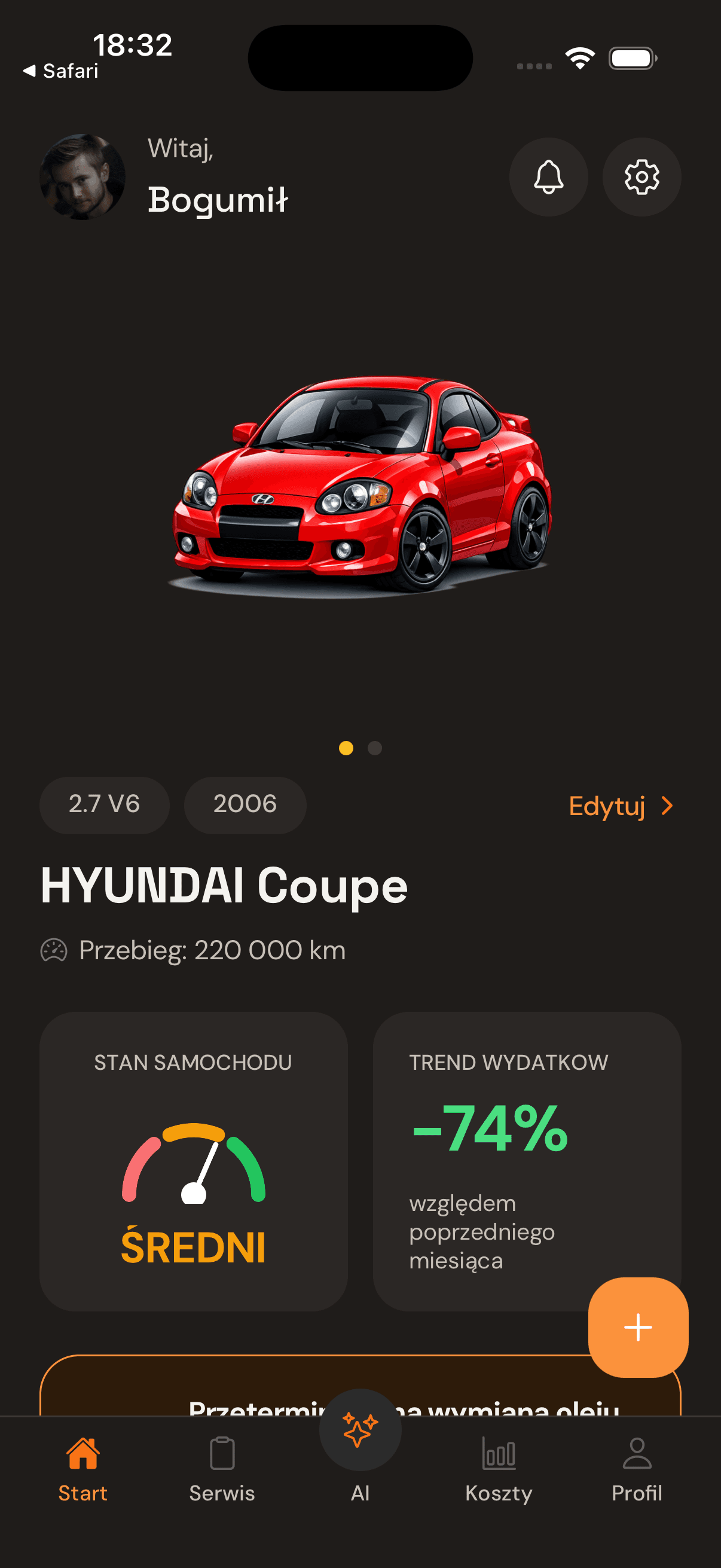
Vehicle dashboard
Main screen with vehicle status, costs, and quick actions.
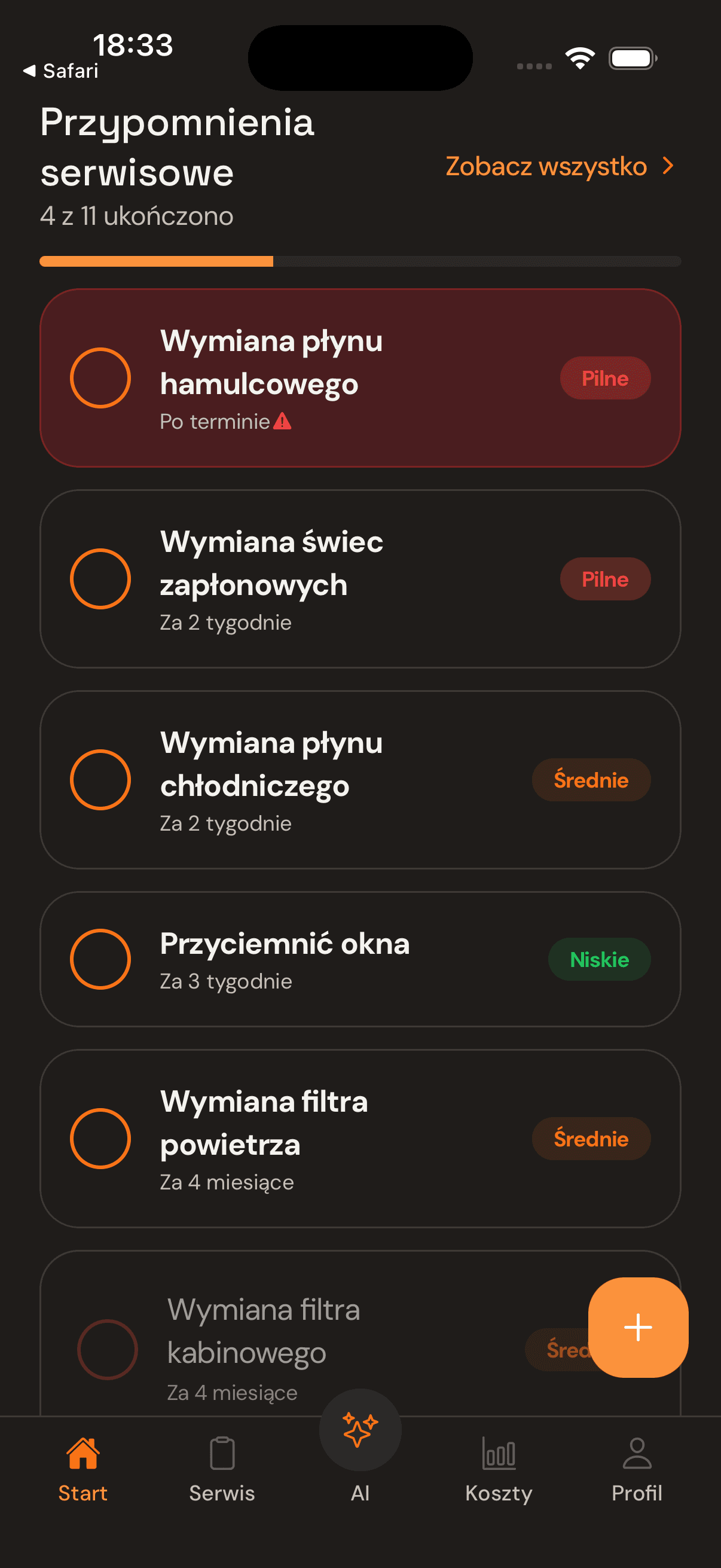
Service reminders
Active reminders and maintenance items to keep the car under control.
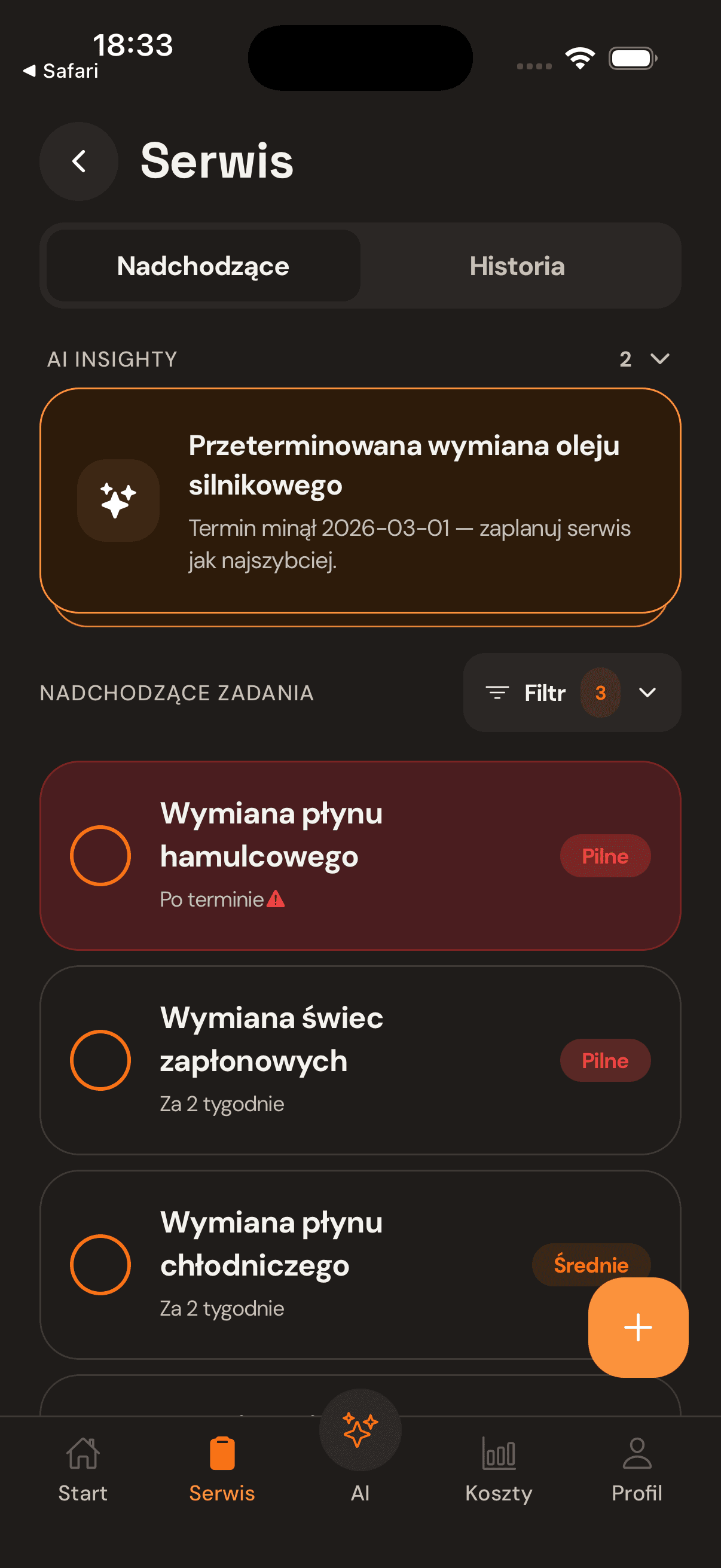
Upcoming tasks
Planned maintenance tasks that make service proactive instead of reactive.
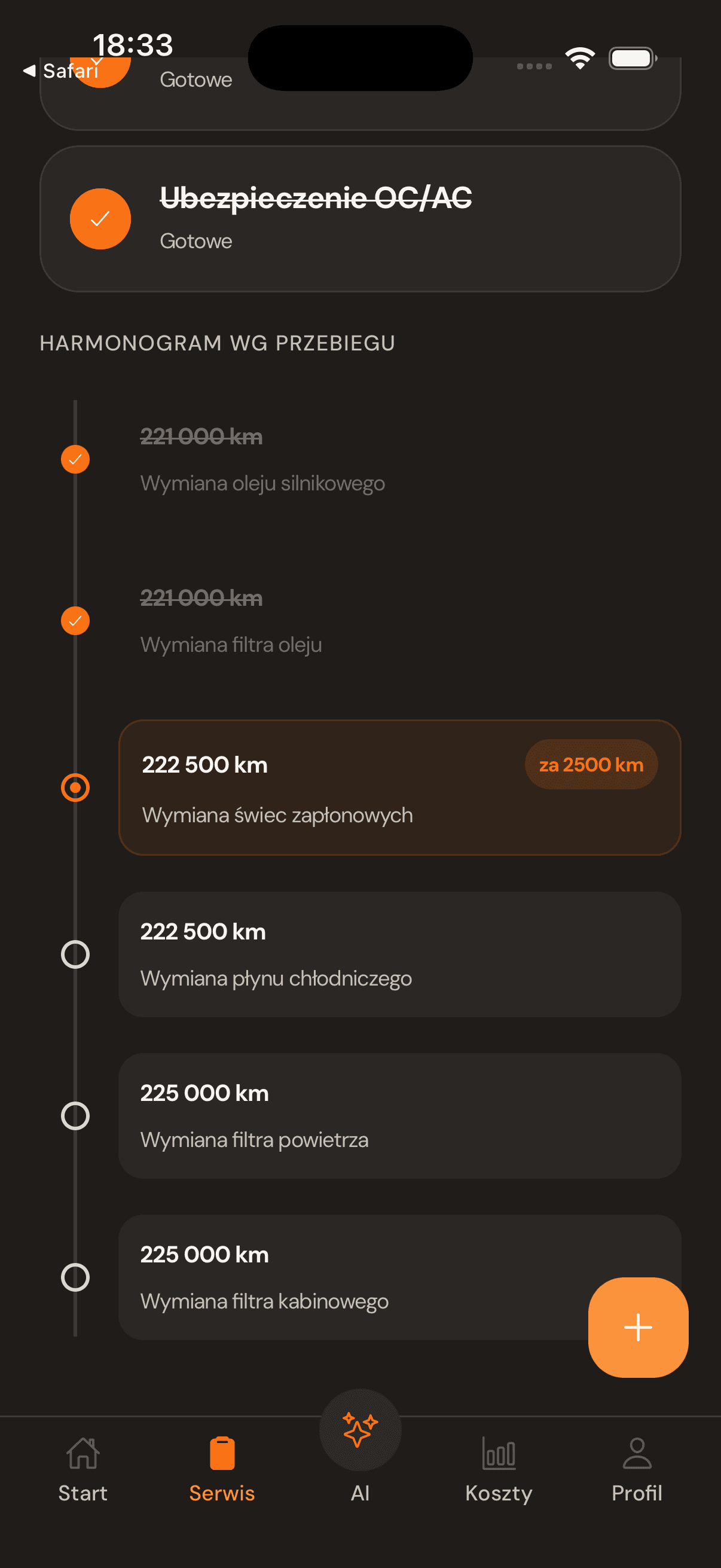
Maintenance schedule
Service planning based on mileage and vehicle history.
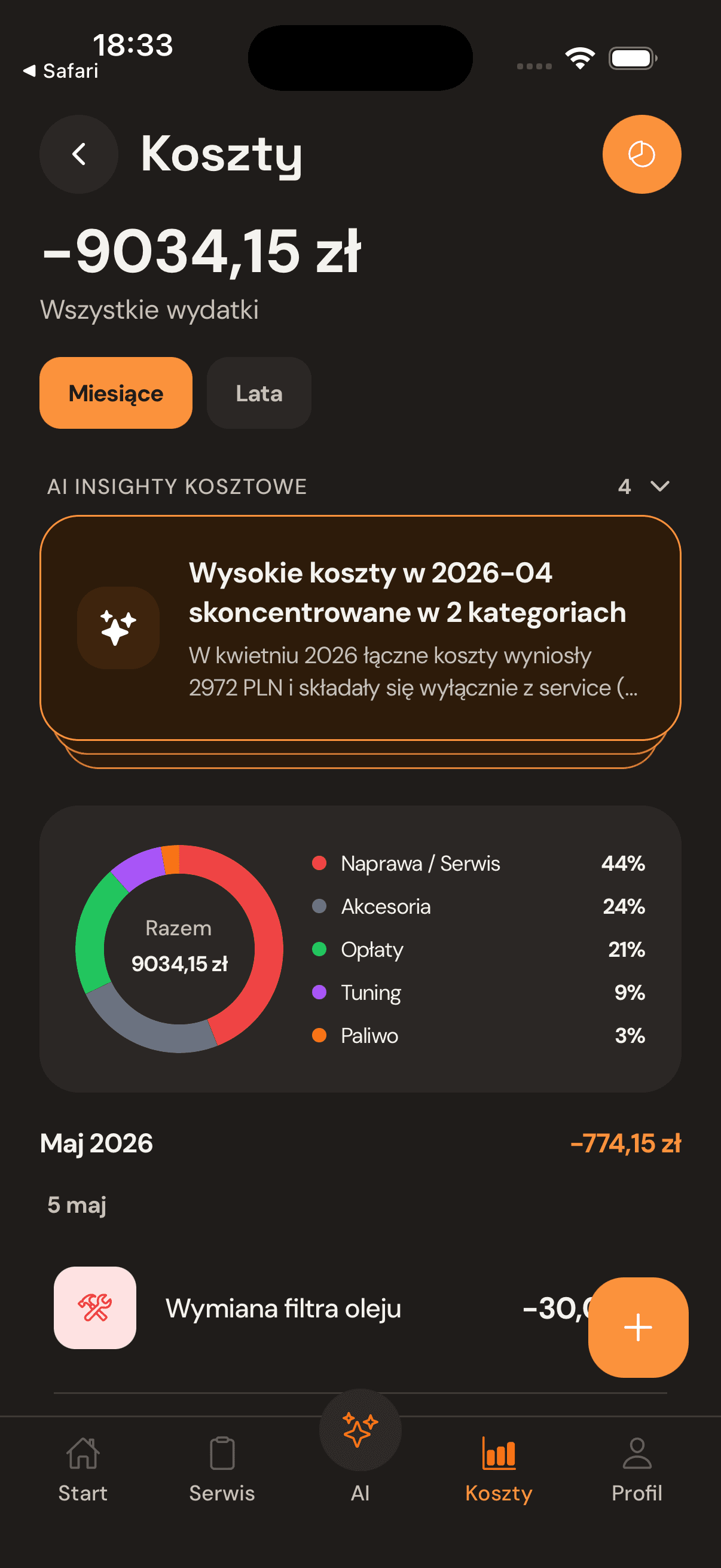
Cost analysis
Expenses grouped by category to show where car ownership costs go.
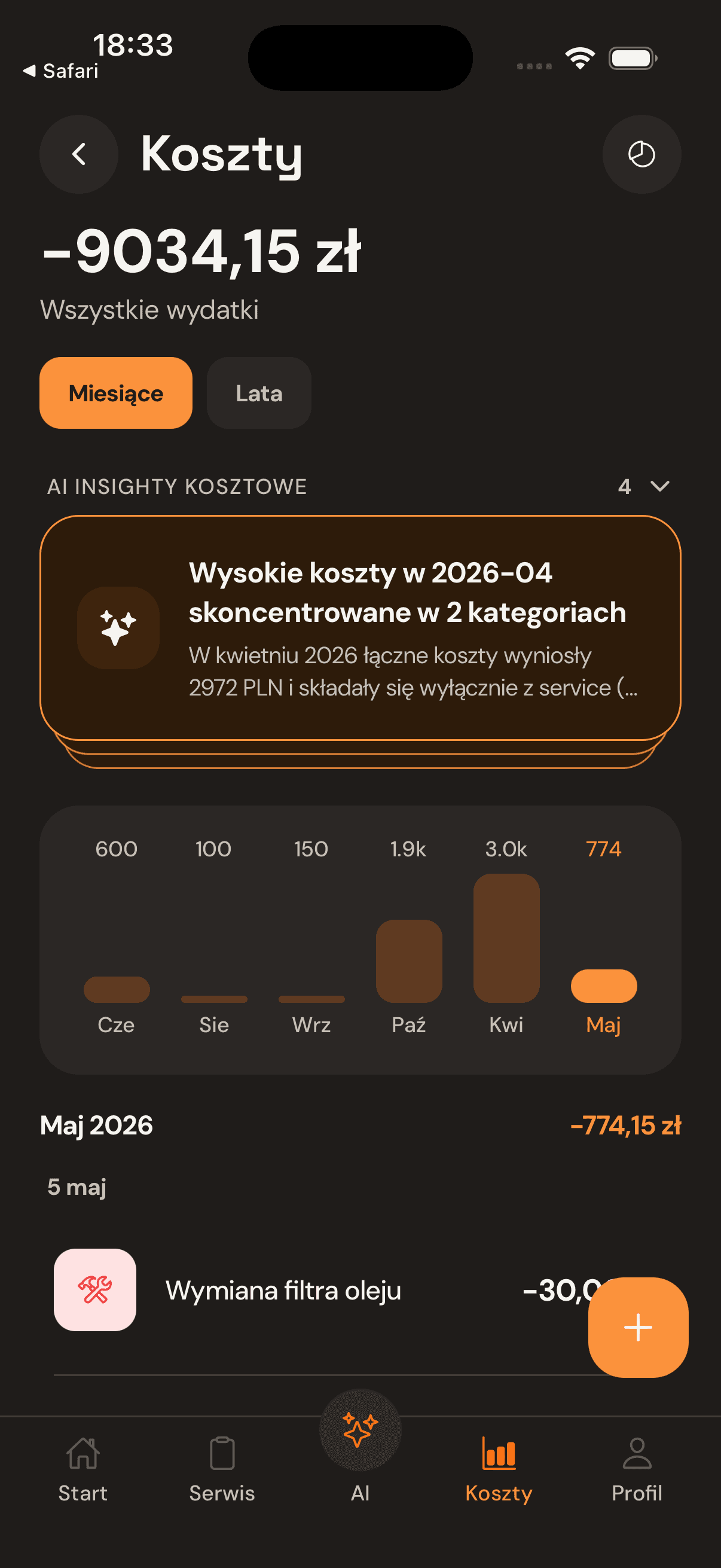
Monthly trend
Cost trends over time with context for service decisions.

Vehicle profile
Vehicle settings and core car data in one place.
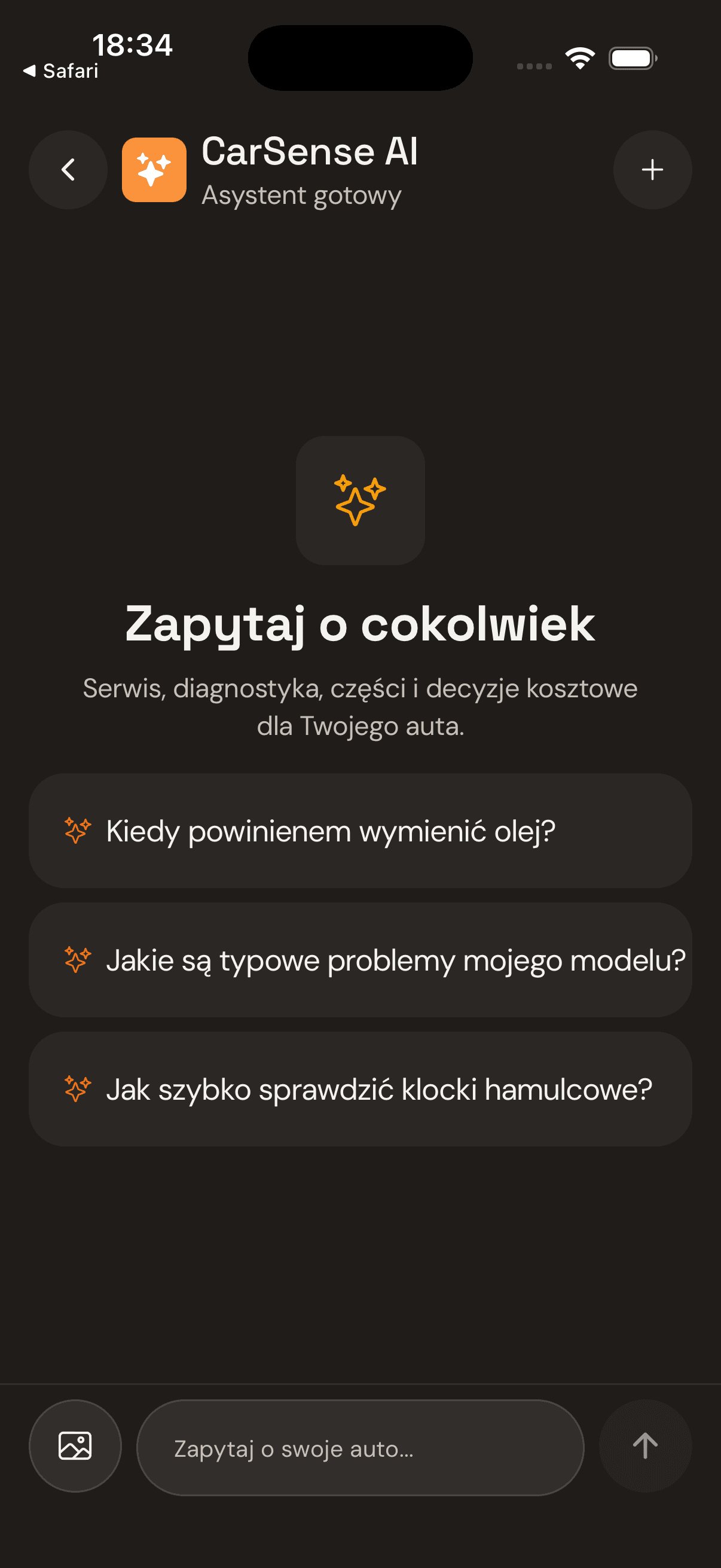
AI assistant
Automotive assistant for questions, interpretation, and recommendations.
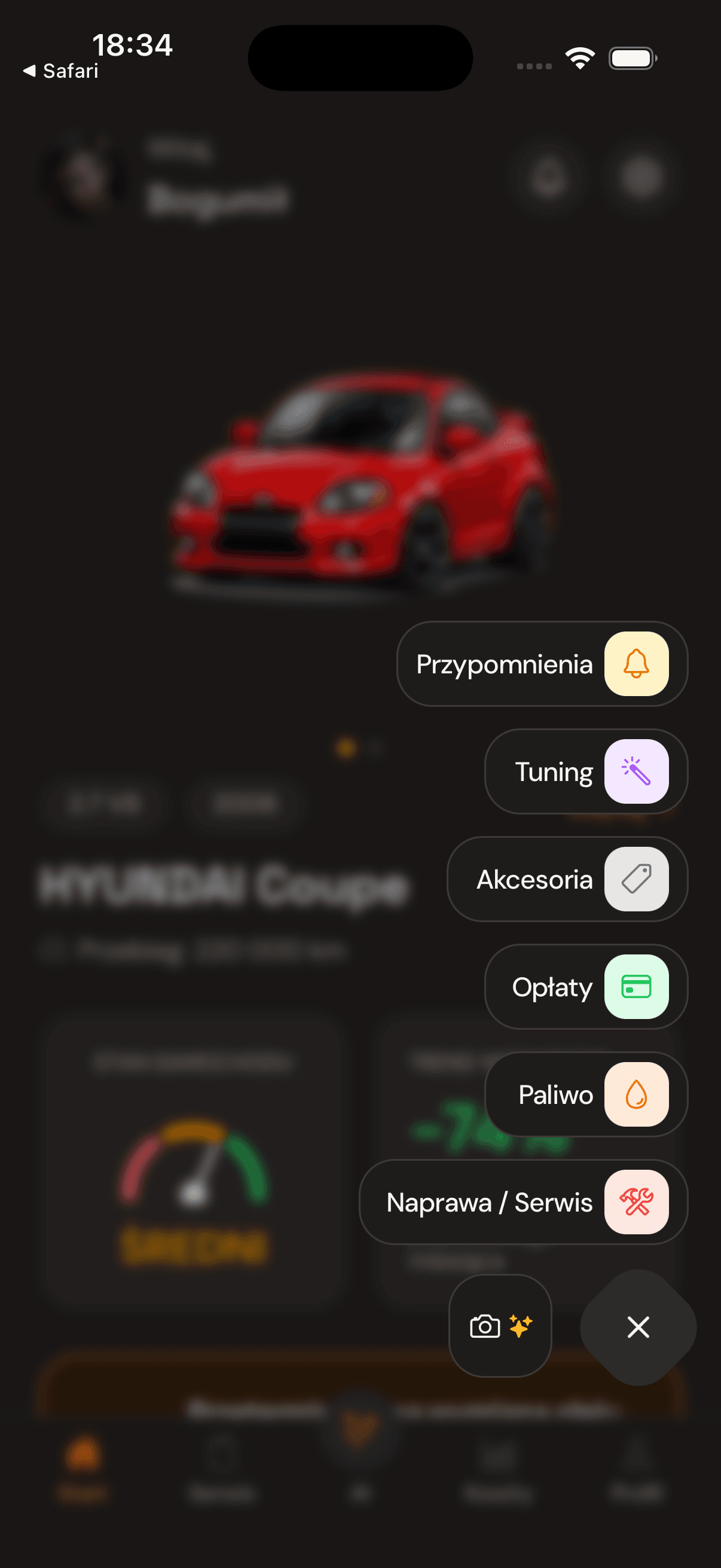
Quick actions
The most common actions available directly from the dashboard.

Add reminder
A short flow for adding a maintenance task without a heavy form.
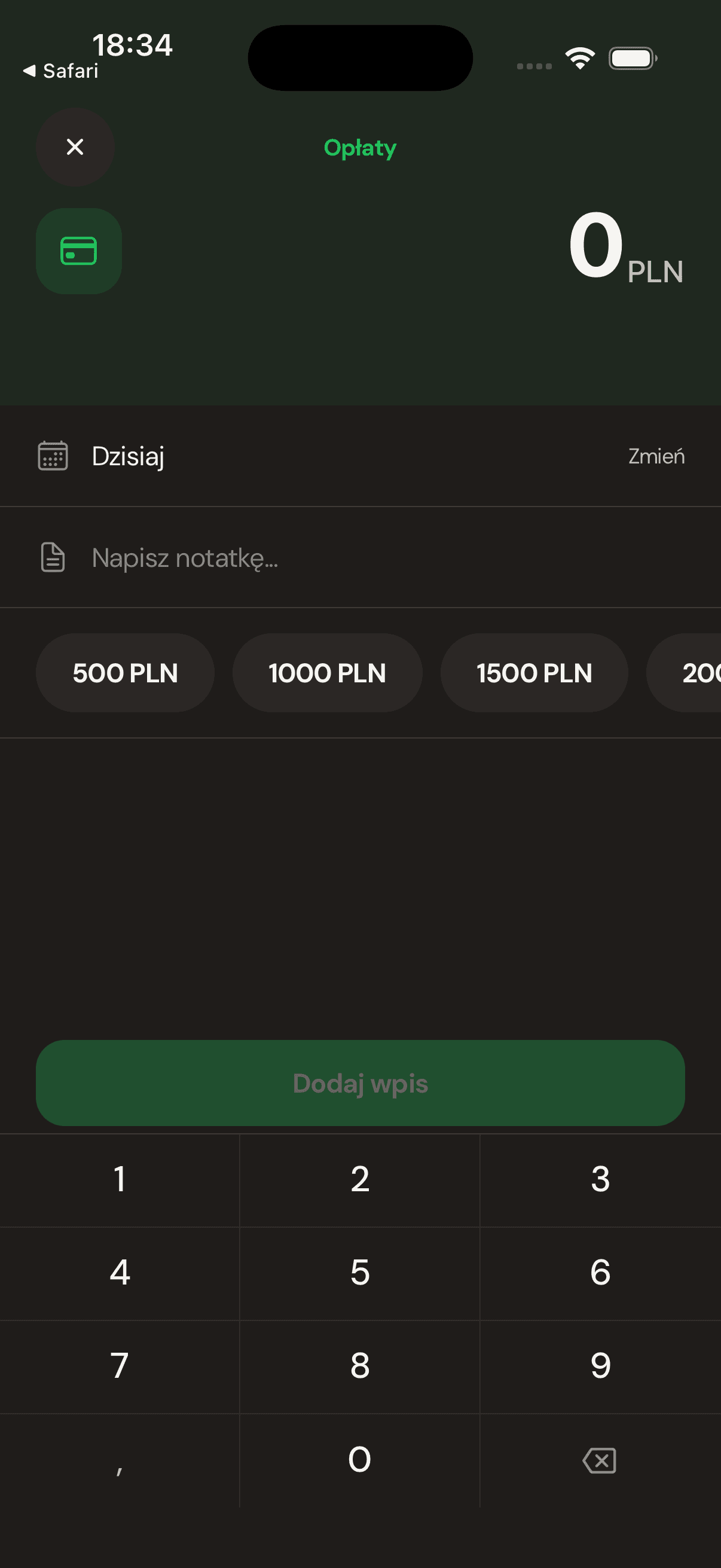
Add expense
Fast cost entry with category and vehicle context.

Expense categories
Costs organized around how people actually maintain a car.
Overview
CarSense started with a simple question: what if your car reminded you what needs attention before something breaks? I built the first MVP in 25 hours. Around 90% of the app was already working at that point; now I’m turning it into a production release.
Problem
Car data is usually scattered: invoices, inspections, costs, mileage, insurance, and early symptoms of problems. Most owners only organize it when something already hurts financially or technically.
Product bet
If an app keeps the car history in one place and suggests the next step, the owner stops acting only after something breaks.
What I built
- Vehicle onboarding and a dashboard with the data that matters.
- Service reminders based on vehicle history.
- OCR for workshop invoices and receipts.
- Expense tracking, charts, and quick cost overview.
- AI assistant with vehicle context and an OBD-II direction.
AI layer
AI extracts data from documents, organizes it, and turns it into tasks: what to check, when to go back to service, and what might become a risk. The point is to remove manual entry, not to decorate the product description.
Architecture
React Native + Expo, Supabase, Vercel AI SDK, and OpenAI. It is built as a normal mobile product: data, payments, i18n, screenshots, and a release path to App Store / Google Play.
Key decisions
- 25 hours for a working core instead of weeks of planning.
- Boring but necessary flows before animation polish.
- AI only where it removes manual work.
- OBD after the core value is finished.
Outcome / evidence
Proof that my process works: from an empty repo to a mobile app with most key screens and flows in one working day.
What I would do next
Finish the production version, payments, i18n, store assets, and the first OBD integration decision.